Genetic evidence for race differences in behaviour
A case study in brown bears, isolation, and domestication-like selection
This post is about bears, and about humans as a pressure shaping bear evolution. It also has a broader implication: it helps calibrate how quickly evolution can generate detectable differences between populations, including human populations, when isolation and demographic shocks are strong enough.
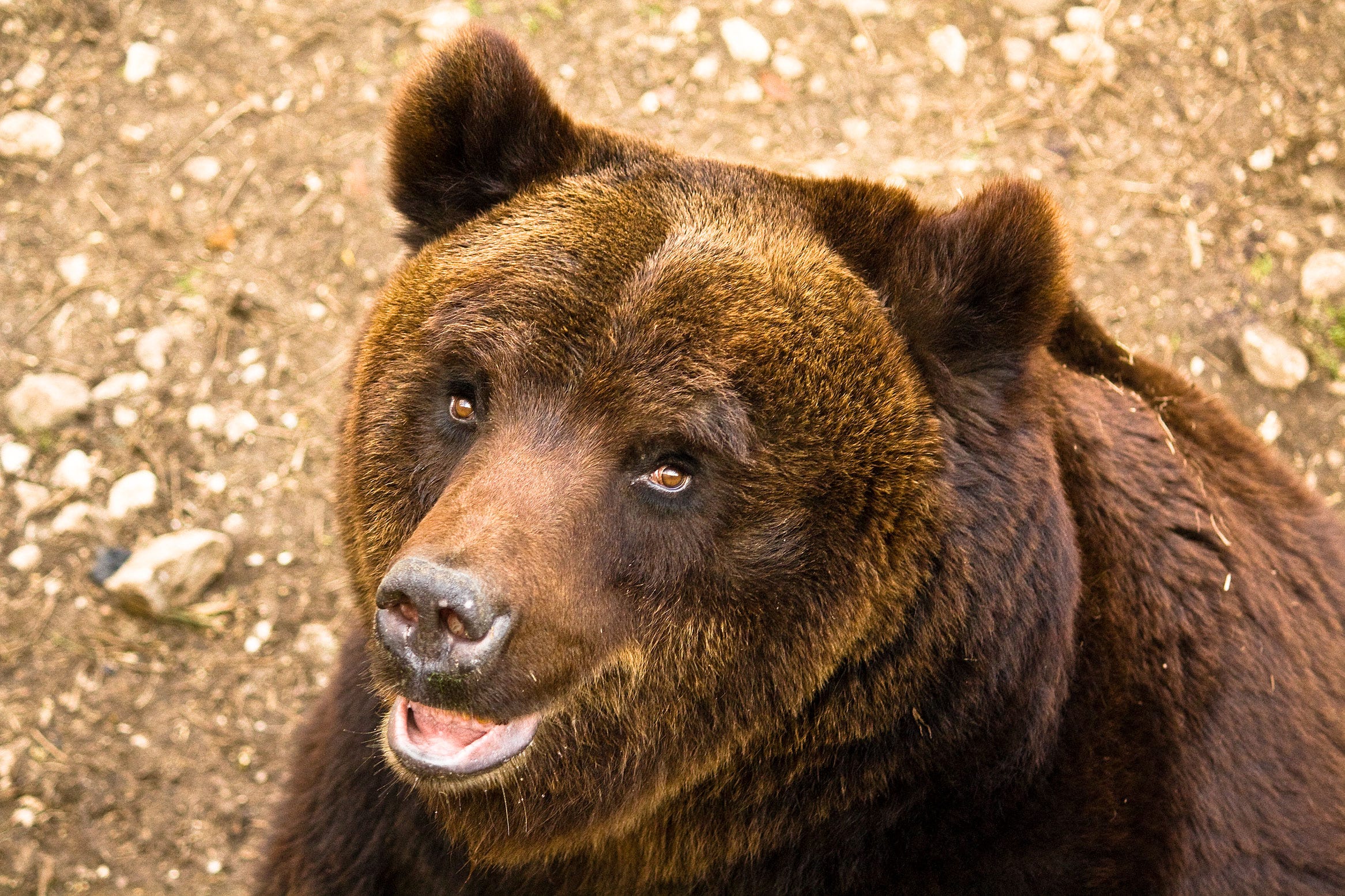
It’s about bears: the Marsican brown bear of the Apennines in Southern Italy, a small relic population surrounded by one of the most human-saturated landscapes in Europe. A new genomics paper (Fabbri et al., 2025) argues that these bears show genetic signals consistent with selection on behaviour, plausibly in a domestication-like direction driven by long-term coexistence with people.
Here’s the uncomfortable bit: if human pressure can push a wild population toward different behaviour within only a few thousand years, then behavioural divergence between populations stops being “unthinkable” and starts looking like ordinary biology.
Before anything else, terminology. The authors do not use the word “race.” They treat the Marsican bear as a subspecies, Ursus arctos marsicanus, and then discuss populations and genome-wide clustering patterns.
A bear that actually behaves differently
The Marsican brown bear is not just genetically unusual; it is also phenotypically distinctive, especially in behaviour. Compared with other European brown bears, Marsican bears are widely described as less aggressive, more tolerant of humans, and unusually non-confrontational. Attacks on humans are essentially absent in the historical record, even though these bears live in close proximity to villages, farms, and roads. They show reduced flight distances, frequent use of human-modified landscapes, and a general tendency to avoid conflict rather than escalate it.
Ecologically, they are also more omnivorous and opportunistic, relying heavily on plant foods and seasonal resources, which further reduces direct competition with humans. These traits are not anecdotal curiosities; they are precisely what make the long-term coexistence of a large carnivore with dense human populations possible in the Apennines, and what distinguish the Marsican bear from many other European brown bear populations.
In other words, the behavioural differences that motivate the genetic analysis are not hypothetical. They are the empirical starting point.
A natural experiment: isolation plus humans
The Marsican bear is almost tailor-made for population genetics. Small effective population size, restricted range, limited gene flow, and a long history of being hemmed in by people. That combination does two things. First, it creates strong genetic drift and inbreeding. Second, it creates a plausible selective environment: bears that get into conflict with humans are more likely to be removed; bears that tolerate humans are more likely to survive.
The paper builds a high-quality reference genome for the Marsican subspecies, resequences multiple individuals, and compares them to brown bears from elsewhere in Europe (including a Slovak comparison population), plus published genomes. The analysis is classic population genomics: quantify inbreeding, reconstruct demography, and then look for genomic regions that are unusually differentiated.
Real subspecies on historical timescales
One of the most striking aspects of the Marsican bear case is how recent the divergence appears to be. According to the paper, the Apennine brown bear diverged from other European brown bears roughly 2,000 to 3,000 years ago, and has been completely isolated for at least the past ~1,500 years.
In evolutionary terms, this is almost nothing. We are not talking about Ice Age separations or Pleistocene refugia tens of thousands of years old, but about a split that unfolded entirely within recorded human history. And yet, confirmable genetic differentiation has already accumulated to the point that the population is treated as a distinct subspecies, Ursus arctos marsicanus.
This is an important corrective to a common intuition: that subspecies necessarily require vast timescales to emerge. They do not. Under conditions of strong isolation, small population size, and limited gene flow, genetic structure can arise very quickly. Drift accelerates. Bottlenecks amplify differences. Alleles fix or disappear at rates that would be impossible in large, well-connected populations.
The Marsican bear illustrates this clearly. A few thousand years of partial separation, followed by roughly a millennium and a half of near-complete isolation, were sufficient to produce a population that is genetically diagnosable, strongly differentiated, and evolutionarily distinct within Europe.
This puts hard temporal bounds on claims about divergence. If a large mammal can become a recognizable subspecies on a timescale of only a few thousand years, then genetic differentiation between isolated populations should not be treated as an implausible or exceptional outcome. Under the right demographic conditions, it is entirely routine. And as a point of reference, many human populations have been partially separated for far longer than this (often tens of thousands of years, depending on the comparison), while also experiencing founder events, bottlenecks, and varying degrees of gene flow.
What the genetics clearly show
The strongest results have nothing to do with psychology or “temperament.” They are demographic.
Marsican bears show extreme homozygosity and long runs of homozygosity across the genome, consistent with very recent and intense inbreeding. They also show signals of a pronounced bottleneck in the recent past, recent meaning in evolutionary terms rather than historical memory. Genome-wide distance measures and phylogenetic clustering place Marsican bears on a distinct branch among European brown bears.
That part is straightforward. A small, isolated population looks like a small, isolated population.
The ambitious step comes next. The authors run several selection-scan methods, flag regions of the genome that look unusually differentiated relative to other bears, and ask what kinds of genes sit in those regions. The headline is that many candidate loci overlap genes involved in nervous system function, neurodevelopment, synaptic biology, and related pathways. Some of the highlighted differences include regulatory changes and structural disruptions such as deletions.
On top of that, the authors offer an interpretation that will be familiar to anyone who has followed domestication genetics. In a human-saturated landscape, selection may have acted against bears that were aggressive, bold, or conflict-prone. Over time, this could produce a population that is more tolerant of humans. In other words, not domestication in the strict sense, but a domestication-like filtering process.
This is the point where the paper invites comparison to three famous stories.
Dogs are the obvious parallel: behavioural divergence from wolves, rapid change under selection, and a genetic architecture that often points to regulatory variation and neurodevelopmental pathways. The Siberian fox experiment is the gold standard: select directly on tameness and watch a suite of behavioural and physiological traits evolve quickly, with accompanying changes in gene expression and development. And then there is the much-debated hypothesis of human self-domestication, where selection against reactive aggression is proposed to have shaped social behaviour and even craniofacial traits.
Placed in that landscape, the Marsican bear is a compelling candidate for “wild self-domestication under human pressure.”
The hard part: what selection scans do and do not prove
Genomic outlier methods can be excellent at telling us where the genome looks unusual. They are much worse at telling us what phenotype changed. A region enriched for “neural” genes sounds like behaviour, because brains sound like behaviour. But “neural gene” is not a behavioural phenotype, and a structural disruption is not automatically a behavioural mechanism.
To turn a genomic signal into a behavioural claim, at least one missing link is needed. Either behavioural phenotypes need to be measured in a way that can be connected to individuals, families, or genotypes. Or there needs to be an association framework, the analogue of a GWAS, that maps variants to behavioural variation. Or there needs to be functional validation showing what the candidate variants do in relevant tissues and pathways.
Without that, the domestication story remains suggestive rather than demonstrated.
There is also a specific reason caution is warranted in this system. The Marsican bear population is extremely bottlenecked and inbred. That demographic reality makes selection scans harder to interpret, because drift can push alleles to high frequency, create long haplotypes, and inflate the appearance of “outlier” differentiation. In small populations, unusual-looking genomic regions are common even when selection is not the main driver. That does not mean selection is absent; it means the evidentiary bar for calling selection, and then calling behaviour, should be higher, not lower.
So what does the paper actually establish? It establishes that Marsican bears are a genetically distinct, heavily drifted, inbred subspecies. It establishes that some regions are unusually differentiated and that candidate genes in those regions are enriched for categories that include nervous system functions. It suggests that long-term coexistence with humans provides a plausible selective pressure that could bias survival toward less conflict-prone individuals.
What it does not yet establish is that specific variants caused specific behavioural changes.
Why this paper is still interesting
None of this makes the paper unimportant. If anything, it highlights why it is worth reading.
The study is a clean demonstration of how quickly and how sharply genetic structure can emerge in an isolated population, and it raises a biologically plausible hypothesis about behavioural evolution under human filtering. It also illustrates a recurring pattern in modern genomics: sequencing produces crisp signals, while behaviour remains a noisy phenotype, so the temptation to tell crisp stories about noisy traits is ever-present.
The Marsican bear is a beautiful test case because it sits at the intersection of three themes: population structure, selection under human pressure, and the perennial question of how far genetic evidence can be pushed when the phenotype is behaviour.
If domestication genetics has taught anything, it is that behaviour can evolve rapidly. The open question here is not whether it can happen, but whether this paper has pinned down the causal chain.
Right now, the strongest conclusion is modest but still striking: a genetically distinct bear subspecies living alongside humans shows genomic patterns consistent with strong drift and inbreeding, and it carries differentiated regions enriched for neuro-related genes, which is compatible with, but does not by itself prove, behavioural adaptation in a domestication-like direction.
References
Fabbri, G., Biello, R., Gabrielli, M., Torres Vilaça, S., Sammarco, B., Fuselli, S., Santos, P., Ancona, L., Peretto, L., Padovani, G., Sollitto, M., Iannucci, A., Paule, L., Balestra, D., Gerdol, M., Ciofi, C., Ciucci, P., Mahan, C. G., Trucchi, E., Benazzo, A., Bertorelle, G. (2025). Coexisting with humans: Genomic and behavioral consequences in a small and isolated bear population. Molecular Biology and Evolution, 42(12), msaf292. https://doi.org/10.1093/molbev/msaf292