
Were Celts and Germanics Genetically Different?

When we talk about “Germanic” or “Celtic,” we’re usually talking about language or art styles, not necessarily DNA. You can speak a Celtic language without having a single “Celtic” ancestor, just as a village could use La Tène-style pottery without being related to the people who invented it. That’s where the confusion starts.
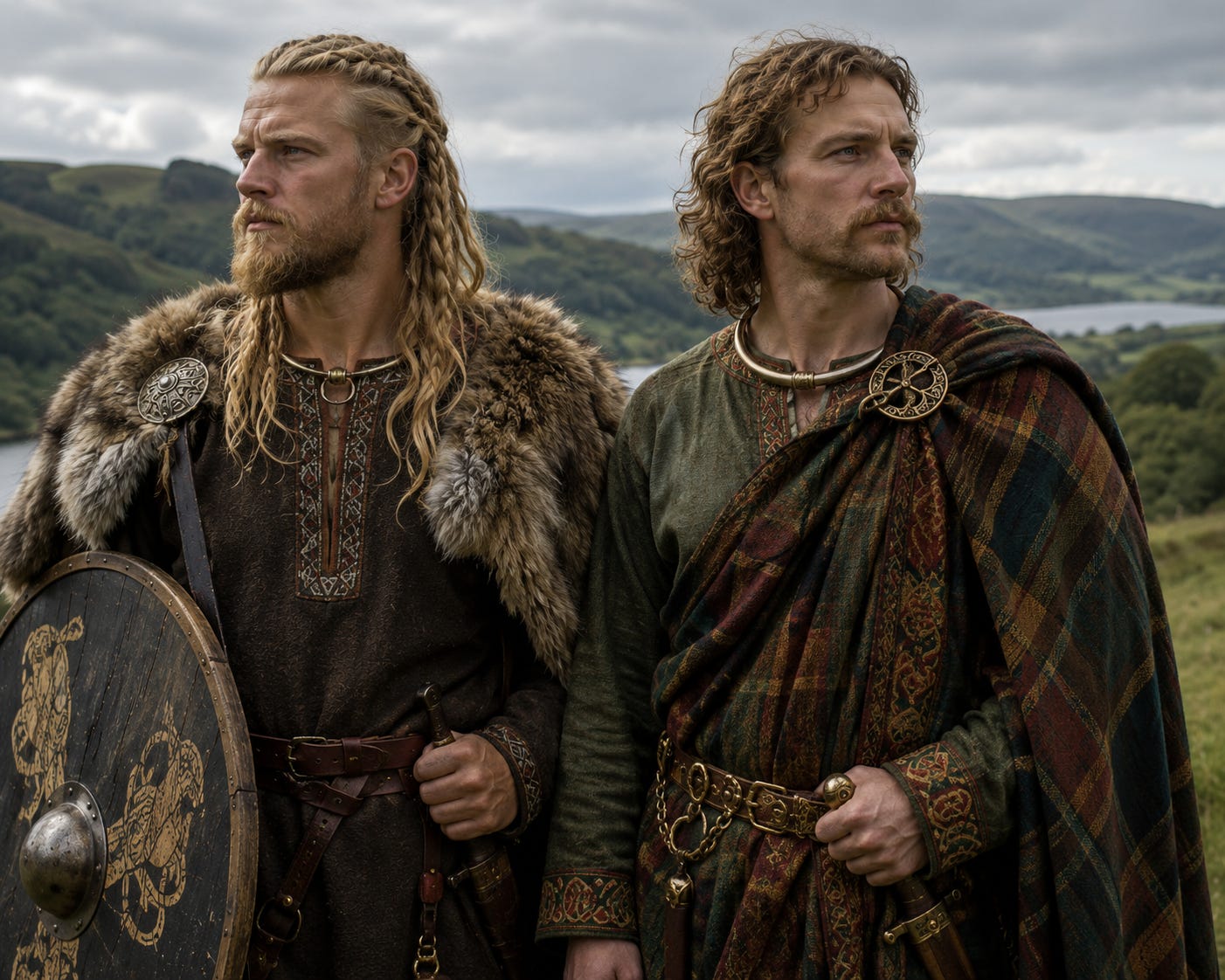
The “Celtic” Identity Crisis
The Celtic label is particularly messy. Today, we think of the Celts as people from the Atlantic fringes—Ireland, Scotland, Wales, and Brittany. However, archaeology points to Central Europe (the Hallstatt and La Tène sites) as the original homeland.
This creates a massive contradiction:
The Geography Problem: The people we call Celts today live far away from where “Celtic” culture actually started.
The Definition Problem: Is “Celtic” a language, a fashion sense, an ethnicity, or a genetic marker?
Scholars like John Collis and Patrick Sims-Williams have spent years warning us not to get these things twisted. You can’t just draw a circle around a group of ancient pots and assume everyone using them shared the same bloodline. While old theories suggested Celts migrated from Central Europe to the West, newer “Atlantic” theories suggest the opposite. For geneticists, the lesson is simple: Don’t assume a linguistic label is a DNA profile.
Testing the DNA
We can now use ancient DNA to see if these labels actually mean anything biologically.
The Celtic Test: If there is a “Celtic” genetic core, then modern populations in Celtic regions should show a clear link to Iron Age samples from Gaul or Hallstatt.
The Germanic Test: If “Germanic” is its own genetic thing, we should see medieval Saxons and Vikings leaning toward a specific Iron Age Germanic reference point.
The Reality of the Data
This isn’t an easy distinction to make. We aren’t looking for different species or “pure” races; we’re looking at Northwestern and Central Europeans who have been mixing for thousands of years. They share a massive amount of the same deep ancestry.
The real question isn’t whether these groups were “different,” but whether these historical labels actually show up as a distinct signal when you look closely at the math of their genes.
