Ancient reference affinities in Italy
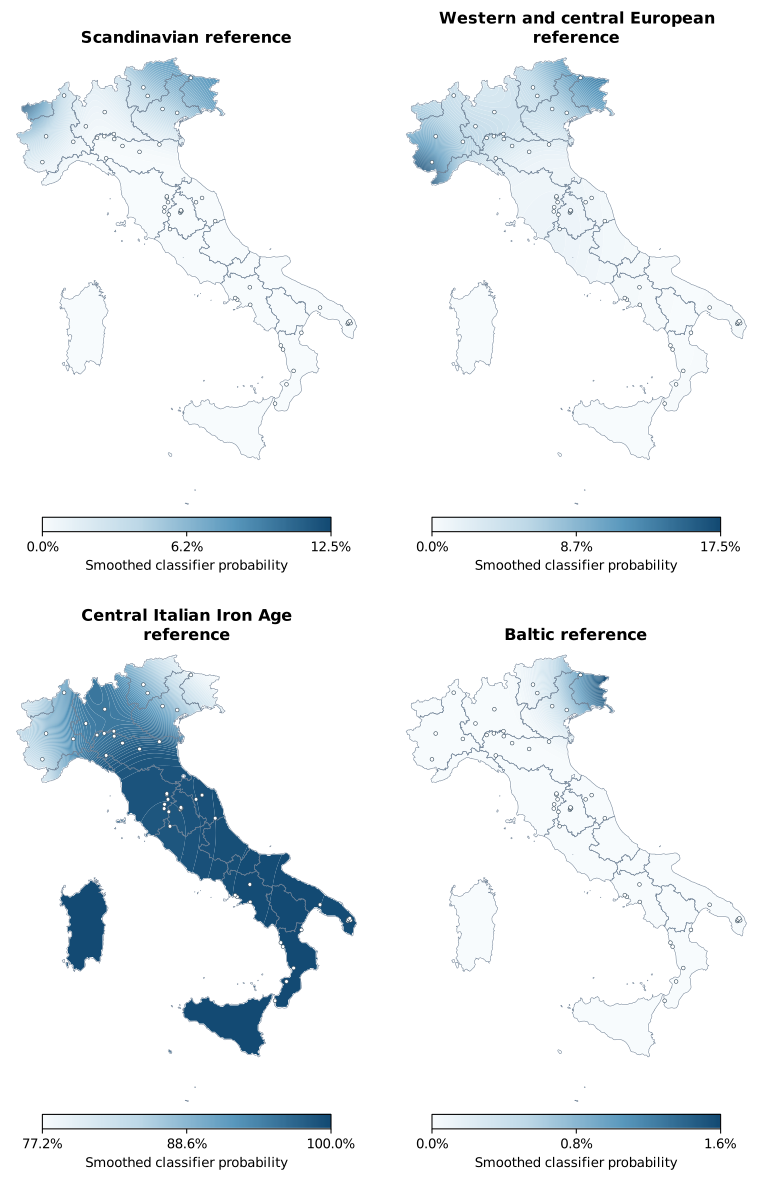
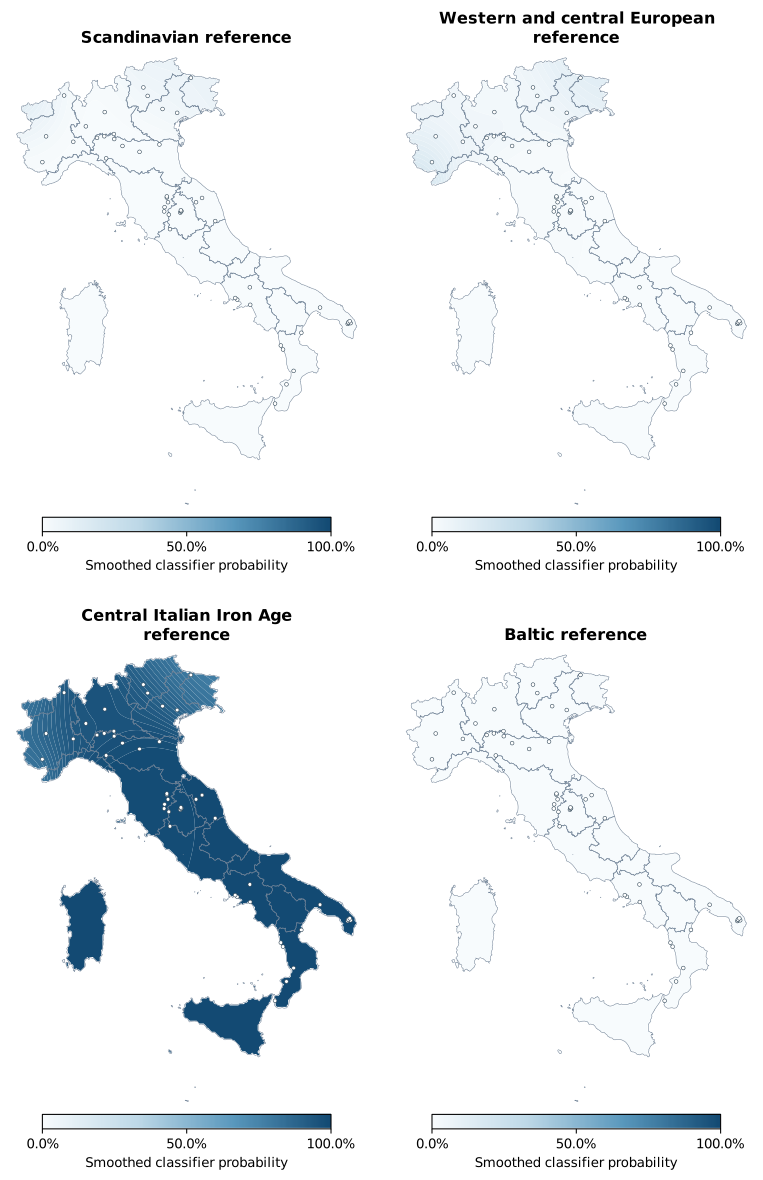
Explore modern Italian genomes and ancient Italian time series against Scandinavian, western and central European, Baltic and central Italian Iron Age references. These are descriptive classifier probabilities from ten frozen principal components.
How to read these values — Probabilities measure model support for four ancient reference classes. They are not ancestry percentages. The Italian comparator pools central Italian Etruscan, Picene and Latial Iron Age or Republican people. The Baltic comparator is not a Slavic reference.
Modern Italy maps
All 403 people. Inspect four smoothed maps, change colour scales and smoothing width, and find individuals or areas. Broadly located records contribute over their reported province or region.
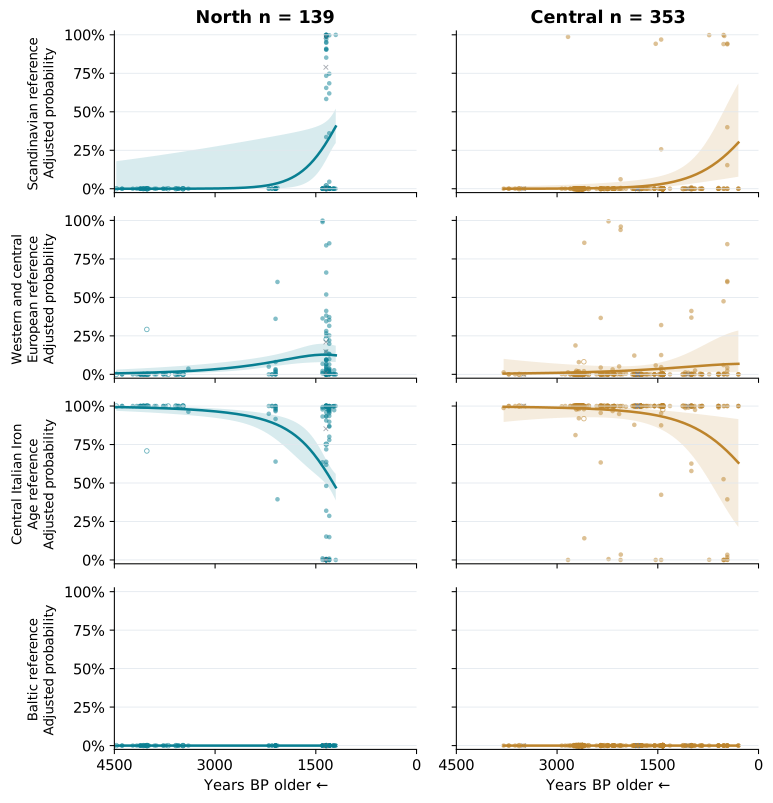
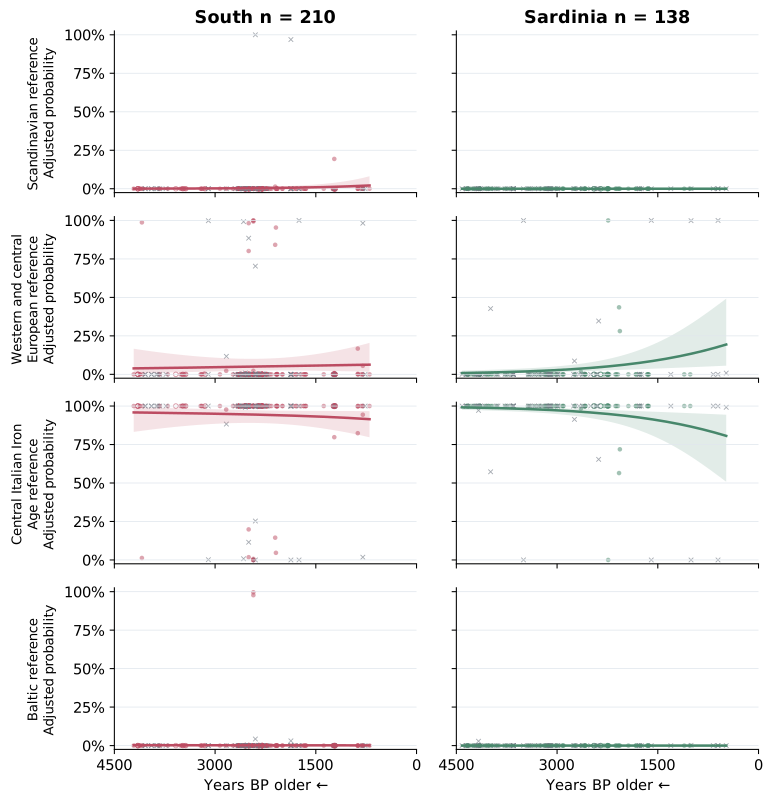
Ancient individuals through time
Explore the original 1,005 projected records. The revised analyses join five additional sample aliases and include 982 distinct dated people. Filter regions, chronology and reference outcomes. Data-quality symbols and reference sensitivity views remain available.
Adjusted chronological trends
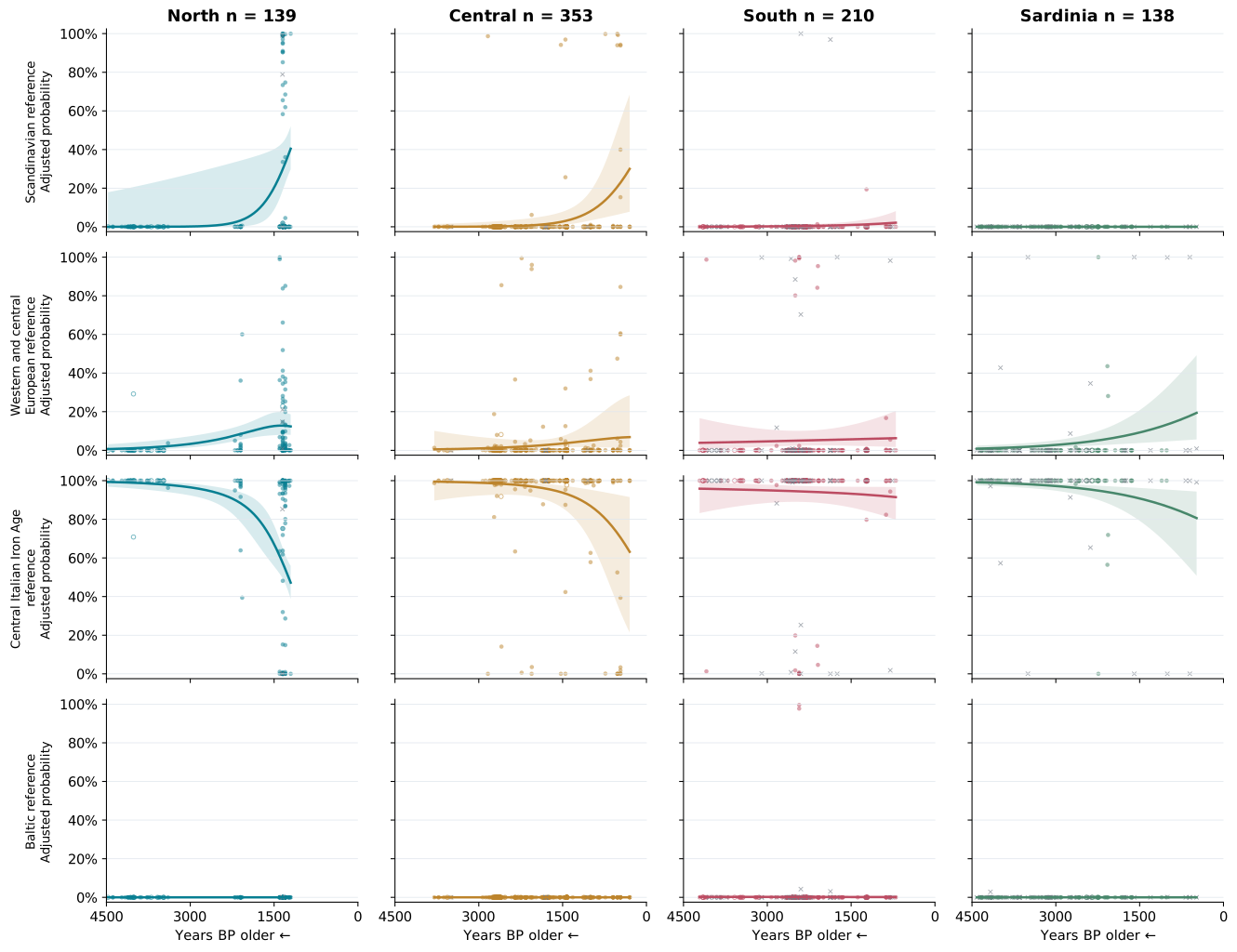
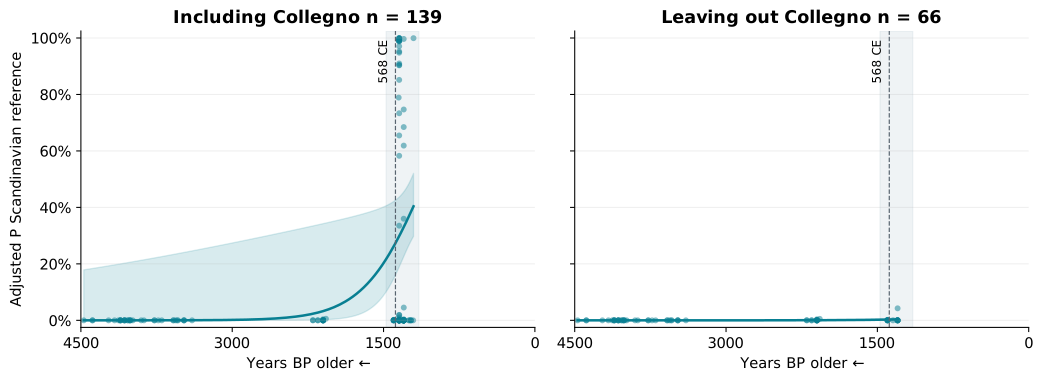
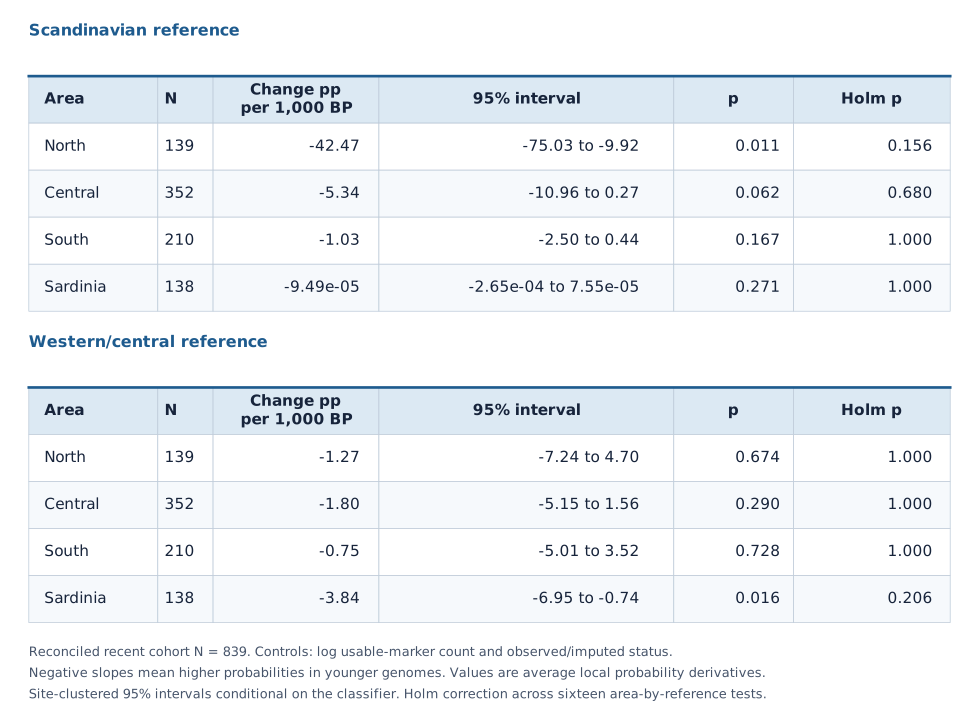
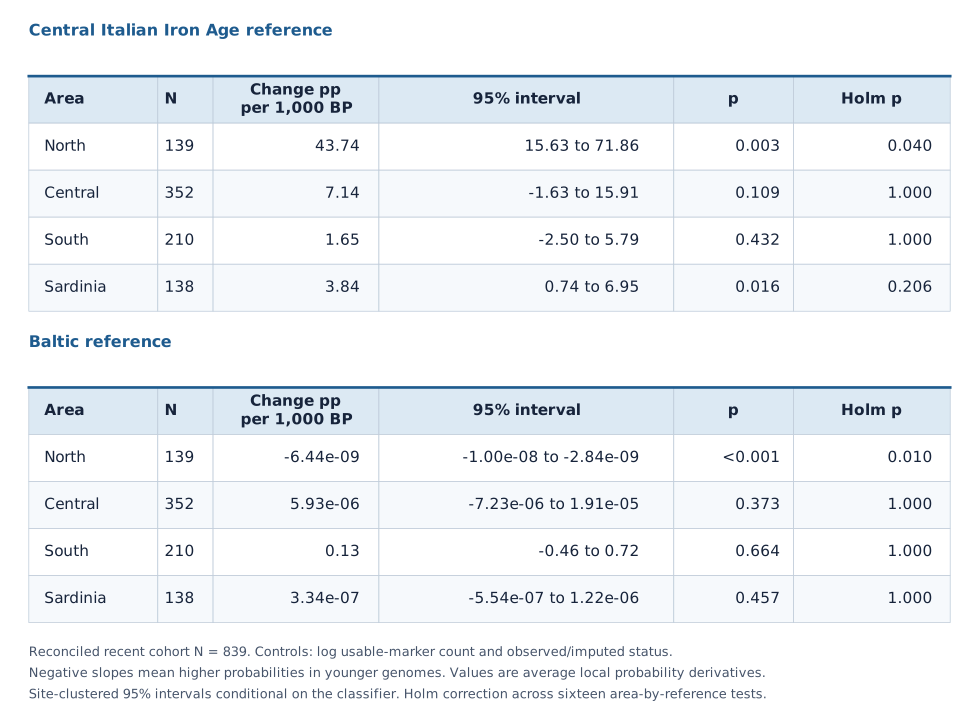
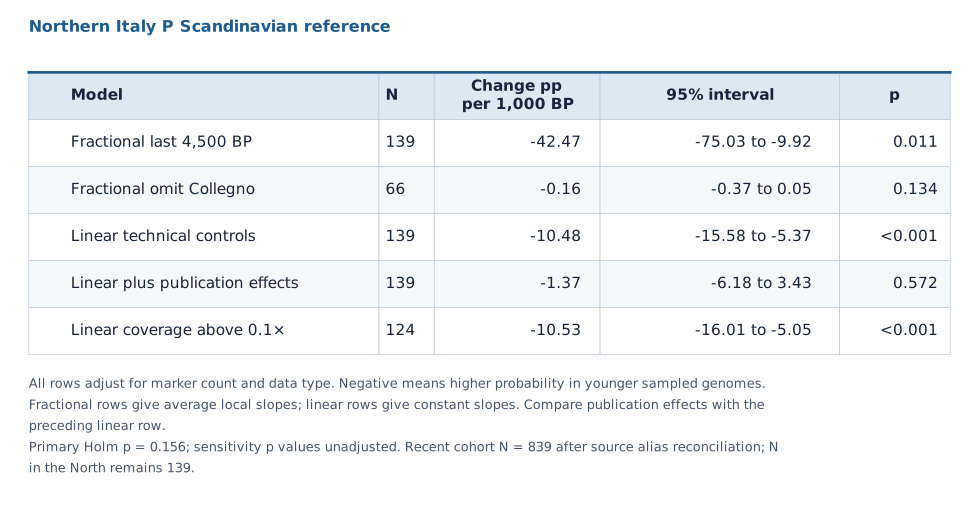
Compare North, Central, South including Sicily, and Sardinia. Select the reference probability before reading Table 6. Examine all dates, the last 4,500 BP and sensitivity models including omission of Collegno.
Historical phase tests and revised results
Test the Beaker and Bronze Age baseline against the Iron Age, trace the Collegno and Himera signals, and download the new tables and source-identity audit.
Download the article figures and tables
SVG masters and exact CSV values are available below. Older genomes appear on the left of chronological figures.
- Figure 1 modern Italy reference maps
- Figure 1 shared scale comparison
- Figure 2A North Central
- Figure 2B South Sardinia
- Figure 2 adjusted ancient time trends
- Figure 3 Collegno influence
- Table 1 AB
- Table 1 CD
- Table 2 northern sensitivity
- Table 1 AB cells
- Table 1 CD cells
- Table 1 primary regressions numeric
- Table 2 northern sensitivity cells
- Table 2 northern sensitivity numeric
Sources and interpretation
The starting ancient-genome collections were analysed in Tracing the spread of Germanic languages using ancient genomics and Tracing the spread of Celtic languages using ancient genomics. This classifier uses independently defined reference groups and adds a central Italian comparator; it does not reproduce those papers’ haplotype-based ancestry estimates.
Analysis and figures dated 6 November 2026. The modern sample is not a representative population survey. Classification outputs do not establish language, ethnic identity or historical migration rates. New Italian-reference contrasts have not been calibrated against every target’s exact marker set.